Before you plug into faster home charging, it helps to make sure the power behind the scenes is ready for the job. The good news is that many homes in this part of Texas are closer to EV-ready than their owners realize.
If you’re planning to install a home EV charger, one of the first questions that comes up is whether your electrical panel can actually handle it. The honest answer is: sometimes yes, sometimes no—but it’s usually not as complicated (or as expensive) as people expect.
Most Houston homeowners don’t need a full panel replacement. But every home is different, and the only way to know for sure is to understand what your current electrical system is already handling—and what adding an EV charger would require.
Related: If you’re still early in the process, this connects directly to the bigger picture of EV Charger Installation Houston, where panel capacity is just one piece of a well-planned installation.
What Your Electrical Panel Does
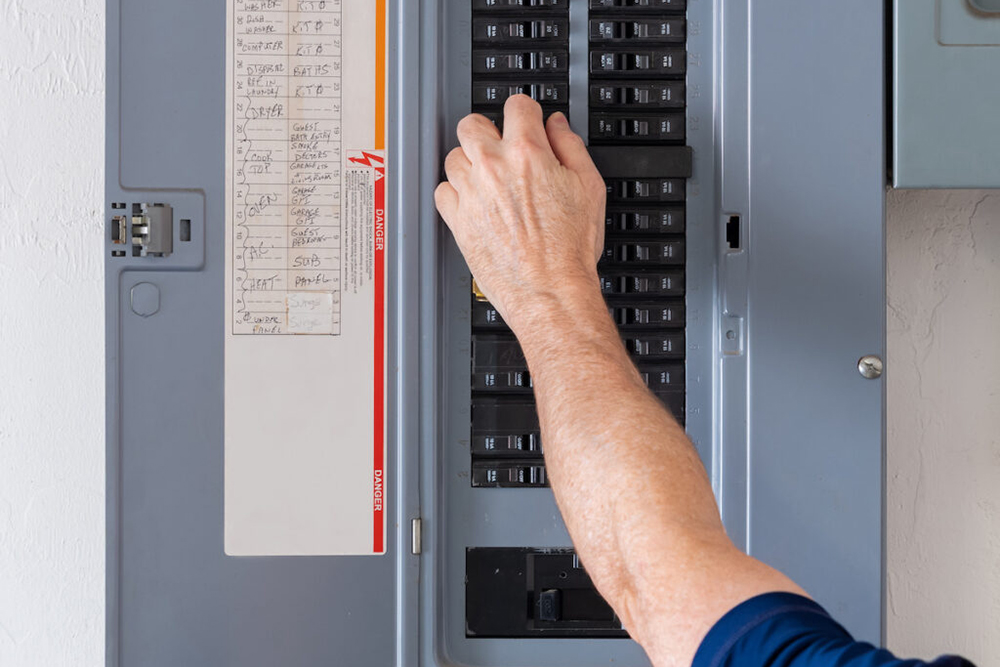
Your electrical panel is the control center for your home’s power. It distributes electricity to everything—your HVAC system, appliances, lighting, and outlets.
An EV charger isn’t just another small device. Especially with Level 2 charging, it’s one of the larger electrical loads your home will use. That’s why the panel matters.
The goal isn’t just to “fit” the charger—it’s to make sure your system can handle it safely and consistently without overloading anything else.
When You Probably DON’T Need a Panel Upgrade
In many cases, your home is already capable of supporting an EV charger with minimal changes.
You’re more likely to be in good shape if:
- Your home has a 200-amp service panel
- There’s available breaker space
- Your panel isn’t already maxed out with large appliances
- Your home is relatively newer or recently updated
In these situations, installing a Level 2 charger is often straightforward:
- Add a new breaker
- Run a dedicated 240V circuit
- Install the charger
That’s it—no major overhaul required.
When a Panel Upgrade Might Be Needed
There are situations where your system may need additional work before adding a charger.
Common scenarios include:
1. Your Panel Is Already Near Capacity
If your panel is already supporting:
- HVAC systems
- Electric water heaters
- Ovens, dryers, etc.
…there may not be enough capacity left for a dedicated EV circuit.
2. You Have a 100-Amp Panel
Older homes often have 100-amp service.
While not automatically a problem, it limits how much additional load you can safely add—especially for faster Level 2 charging.
3. There’s No Space for a New Breaker
Even if your panel technically has capacity, it still needs:
- Physical space
- Proper breaker configuration
A crowded panel can turn a simple install into a more involved project.
4. You’re Planning for More Than One EV
If your household may add another electric vehicle later, it’s often smarter to address capacity now rather than retrofit later.
What an Electrician May Check
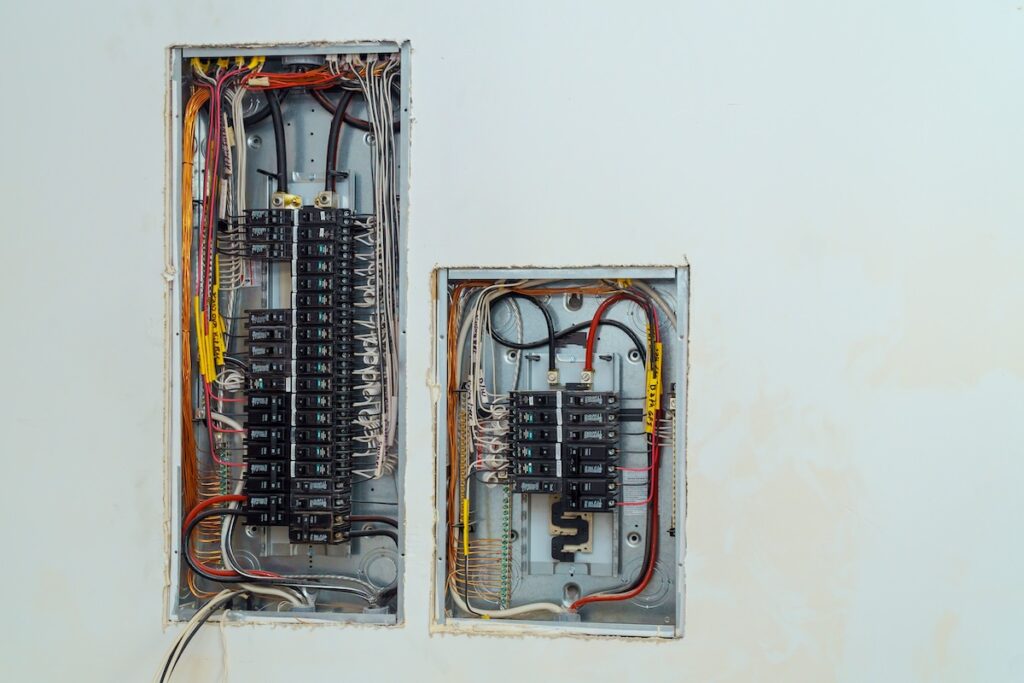
A licensed electrician will perform a load calculation, which looks at:
- Total electrical demand of your home
- Existing circuits and appliances
- Available capacity in your panel
- Required amperage for your EV charger
This determines whether:
- You’re good to go
- You need minor adjustments
- Or a larger upgrade makes sense
It’s not based on opinion—it’s based on code and real electrical limits.
Panel Upgrade vs. Other Solutions
A full panel upgrade is not the only option.
Depending on your setup, alternatives may include:
- Installing a lower-amperage charger
- Using a load management system
- Sharing an existing circuit (in specific, code-compliant scenarios)
These approaches can sometimes avoid the need for a full upgrade while still giving you reliable home charging.
How Much Does a Panel Upgrade Add to the Cost?
If a panel upgrade is needed, it can increase the overall EV charger installation cost—but the amount varies quite a bit from home to home.
That’s because a panel upgrade is not one single flat-price item. In some cases, the work may involve replacing an older panel with a larger one, such as upgrading from 100 amps to 200 amps. In other cases, the panel itself may be adequate, but the installation may require added breaker space, updated wiring, service changes, or related electrical corrections.
Labor complexity is one of the biggest cost factors. A panel that is easy to access, properly labeled, and in good condition is usually more straightforward to work with. A panel that is crowded, outdated, damaged, difficult to access, or tied into older wiring can require more time and planning.
Permits and inspections are, of course, very important. Electrical panel work needs to be handled correctly because it affects the safety and capacity of the whole home, not just the EV charger. In Houston, that means the work should follow local permitting and inspection requirements, which can affect the final project cost.
It’s also important to separate the charger installation cost from the panel upgrade cost. The charger installation may include the dedicated circuit, wiring, breaker, mounting, and setup. A panel upgrade is additional work that prepares the home to safely support that charger.
So, if one quote ishigher than another, it does not automatically mean someone is overcharging. It may mean that quote includes the real electrical work needed to make the installation safe, code-compliant, and reliable.
The best quote should clearly explain what is included, why the panel work is needed, and how it supports the long-term performance of your home charging setup.
Do Houston Homes Typically Need Panel Upgrades?
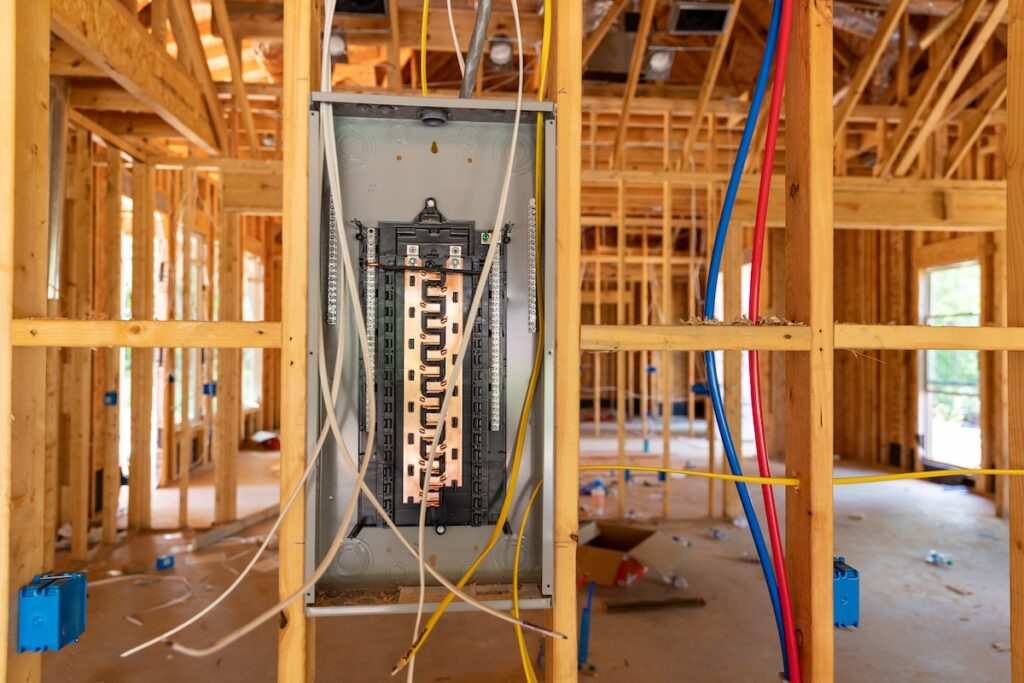
Many Houston homes can support a Level 2 EV charger without a full panel upgrade, especially newer homes that already have 200-amp electrical service. In those cases, the installation may be as simple as confirming available capacity, adding the correct breaker, and running a dedicated 240-volt circuit to the charger location.
That said, “200 amps” does not automatically mean unlimited room. An electrician still needs to look at what the home is already using. Large appliances, HVAC equipment, pool equipment, electric water heaters, electric ranges, and other high-demand systems all factor into the load calculation.
But…
- Older Houston homes are more likely to need a closer look. Some may still have 100-amp service, crowded panels, outdated equipment, or limited breaker space. That does not always mean a full electrical panel replacement is required, but it may mean the installation needs extra planning before a charger can be added safely.
- Homes with heavier electrical usage may also need adjustments. For example, a household with multiple air conditioning units, a pool, a workshop, or several large electric appliances may have less spare capacity than expected. In those situations, the best solution might be a panel upgrade, a lower-amperage charger, or a load management setup.
- Needing to charge multiple electric vehicles can change the picture as well. One EV charger may be manageable, but planning for two vehicles often requires a more thoughtful electrical design. Even if you do not install a second charger right away, it may be worth considering future capacity while the first installation is being planned.
So the real answer is this: many Houston homes do not need a panel upgrade, but some do need electrical adjustments. The only reliable way to know is to have a licensed electrician evaluate the panel, calculate the load, and recommend a setup that fits both your home and your charging routine.
The Bottom Line
You might not need a panel upgrade at all to install an electric vehicle charger. But the only way to know is to have your system properly evaluated.
In many cases, EV charger installation in Houston is simpler than expected. In others, a few smart adjustments upfront can save time, money, and frustration later.
Either way, the right approach is always the same:
- Assess first
- Plan correctly
- Install with confidence
And if you’re looking at the full process—from panel capacity to permits to final installation—this all fits into the bigger picture covered in EV Charger Installation – Houston Guide, Cost, Permits & FAQ.
Thinking About Installing an EV Charger?
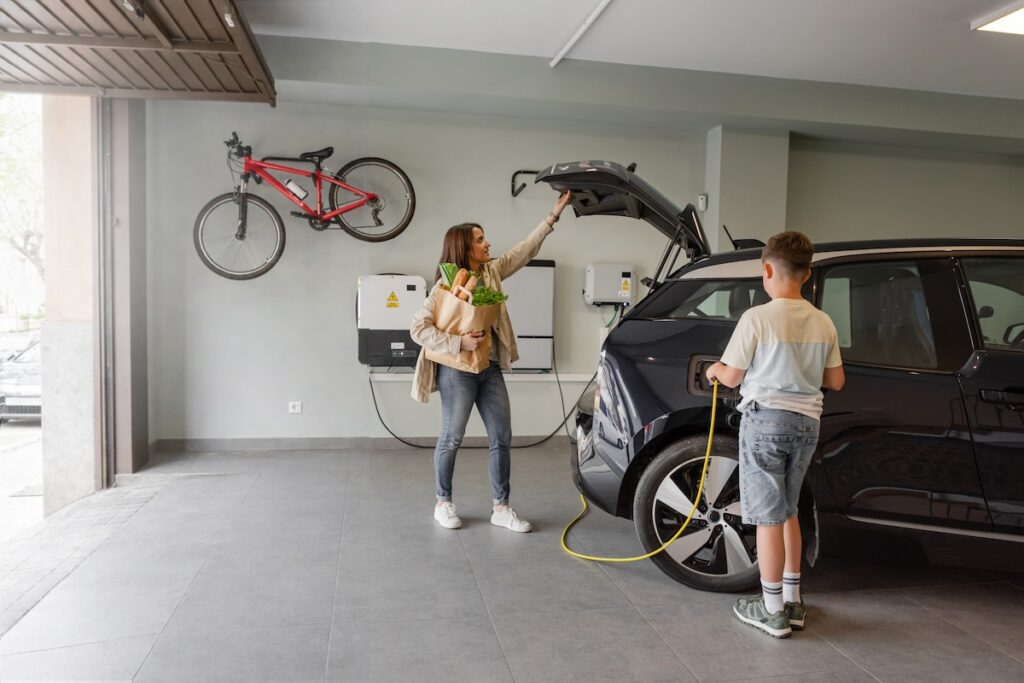
A home EV charger should make daily life easier, not add one more thing to figure out. That starts with understanding what your home can support and what type of setup fits your household’s personal driving routine(s).
Some homeowners already have a charger picked out and simply need a safe, clean installation. Others are still comparing charger options, wondering whether Level 2 is worth it, or trying to figure out if their panel has enough capacity.
Both are normal starting points. The important thing is to begin with the electrical side first. Once your panel, breaker space, wiring route, and charger location are evaluated, the rest of the decision becomes much clearer. You will know whether your home is ready as-is, whether minor adjustments are needed, or whether a larger upgrade should be planned before installation.
From there, choosing the right charger involves matching the equipment to your home, vehicle, and daily routine. A well-planned EV charger installation gives you more than faster charging. It gives you a setup that’s convenient, reliable, code-compliant, and ready to support the way you use your EV every day.


Related Posts
Upgrading your home’s electrical panel is a major decision that comes with real implications for safety, functionality, and long-term value. For homeowners in Houston and Dallas, especially those living in older houses or expanding their [...]
An outdated or undersized electrical panel can quietly undermine your home’s safety, efficiency, and future development. While many homeowners rarely think about their breaker box, it’s the heart of every electrical system. If you’ve been experiencing [...]
The cities of Houston and Dallas–Fort Worth are two of the most dynamic and fast-growing urban centers in the United States. With growing populations, expanding commercial sectors, and continuous development in both residential and infrastructure, the [...]