

Have you ever had to stand in the dark during a thunderstorm? Wind pushing sideways, transformers popping somewhere down the street… staring at your breaker panel like it personally let you down?
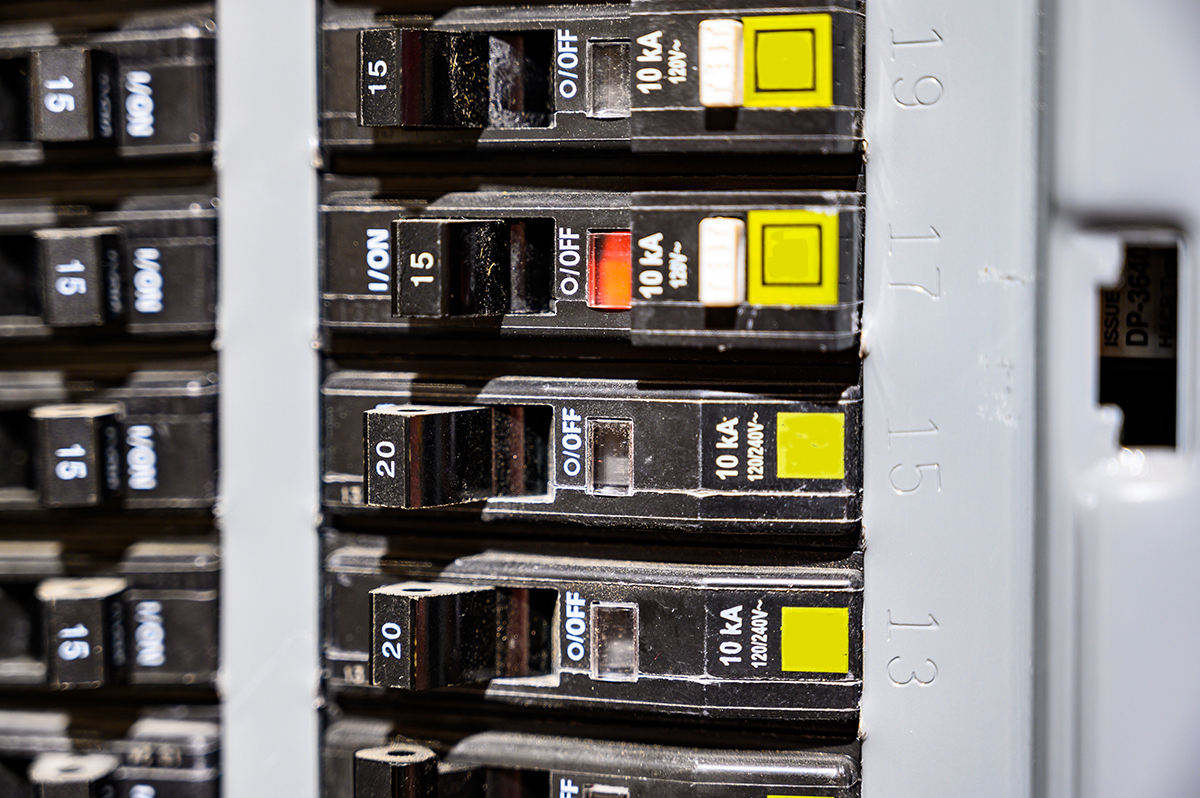
If you’ve lost power during one of our Gulf Coast storms and found yourself in the garage looking at the breaker panel, you’ve probably wondered how hard it would be to run the house off a generator.
In fact, if you’re like many homeowners, you’ve probably had this specific question at one point or another:
“Can I just ‘hook up a generator to my house’ and be done with this?”
It sounds straightforward. The house runs on electricity. A generator makes electricity.
It seems like there ought to be a cord, a plug, a switch—something simple that ties the two together and keeps your fridge cold and lets you turn on a light… while the rest of your block sweats it out in the dark.

Unfortunately, this is the moment where good intentions sometimes drift into very bad decisions.
A house isn’t wired like a giant extension cord. Your electrical system is built around one incoming power source. Everything inside that panel (every breaker, every neutral, every bus bar) is designed with that assumption in mind. Once you introduce a second power source without controlling how and when it connects, you’re changing things in a bad way.
Around here in Harris County, storms aren’t rare events. We get hurricane season, straight-line winds, summer outages from heat load alone. Power loss isn’t theoretical. It’s part of living on the Gulf Coast. That’s why more and more homeowners are looking at whole home standby generator installation and asking the right questions before they spend the money on them.
This guide walks through what connecting a generator to your home actually involves, and what separates a temporary setup from a true whole-home standby system.
The Short Answer: You Can’t “Just Hook Any Generator Up to the House”
There is no safe or legal way to simply plug a generator into your home’s wiring without additional equipment. However, you can connect a generator to a house if you have the required equipment, such as a properly-installed transfer switch that isolates utility power from generator power to prevent backfeeding and serious electrical hazards.
In other words, you can connect a generator to your house. You just can’t do it casually. There’s a very specific way to integrate one safely (involving transfer equipment, proper load calculations, fuel planning, and code compliance) so when the grid goes out, your house switches over to backup generator power automatically.
Why This Is The Way It Is
A home’s electrical system is designed to receive power from one source at a time. When you introduce a second power source without isolating the first, you create a dangerous condition called backfeeding.
Backfeeding can:
- Send electricity back onto utility lines
- Damage your electrical panel
- Destroy appliances
- Injure utility workers
- Void insurance coverage
- Violate electrical code
And it only takes one improper connection to create that scenario.
A generator must be connected through approved transfer equipment that physically prevents utility power and generator power from being connected at the same time.
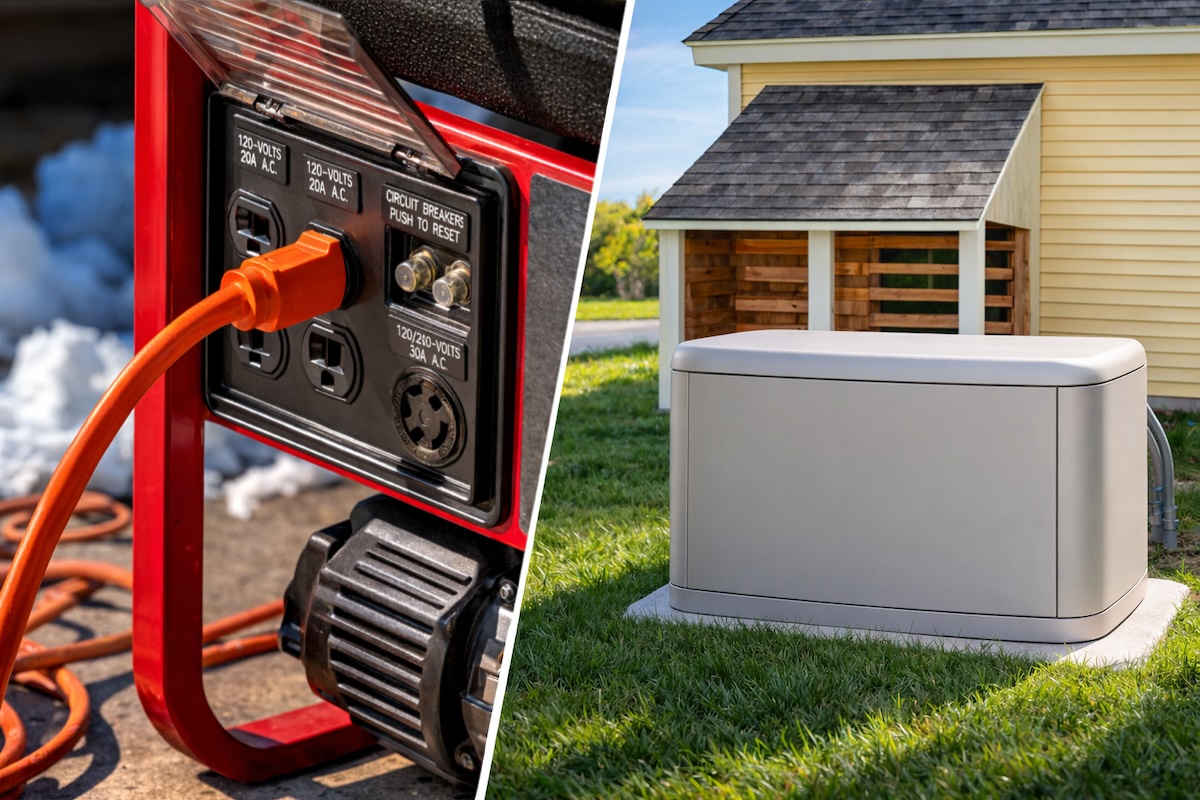
Not all generators produce the same voltage. Many smaller portable units only supply 120 volts, which can power lights, refrigerators, and small appliances but will not run 240-volt equipment. Most homes depend on 240 volts for central air conditioning, electric dryers, ranges, and well pumps. If the generator does not provide true 120/240V split-phase output through a proper 4-wire connection, those circuits simply will not operate, even if the transfer switch or interlock is installed correctly.
This is where expectations and equipment often misalign. A homeowner installs everything properly, flips over to generator power during an outage, and discovers the air conditioner won’t start. The wiring isn’t at fault. The generator output is. Portable generators intended for whole-panel integration typically provide 120/240V power through a 30-amp or 50-amp outlet, while standby generators are designed from the outset to match residential service voltage. Before deciding how you’ll connect a generator, confirm what it can actually deliver. The connection method can be correct and still fall short if the voltage isn’t there.
The Real Question Behind the Search
When someone asks, “Can you just hook up a generator to your house?”, they’re usually asking:
- Is there a shortcut?
- Is there an easy way?
- Can I avoid a big installation project?
There isn’t a shortcut that preserves safety. There is a structured way to do it correctly.
Things You Need to Power a House With a Generator
There are only a few legitimate ways to connect a generator to a home or major appliances.
1. Extension Cords (Temporary, Limited Loads)
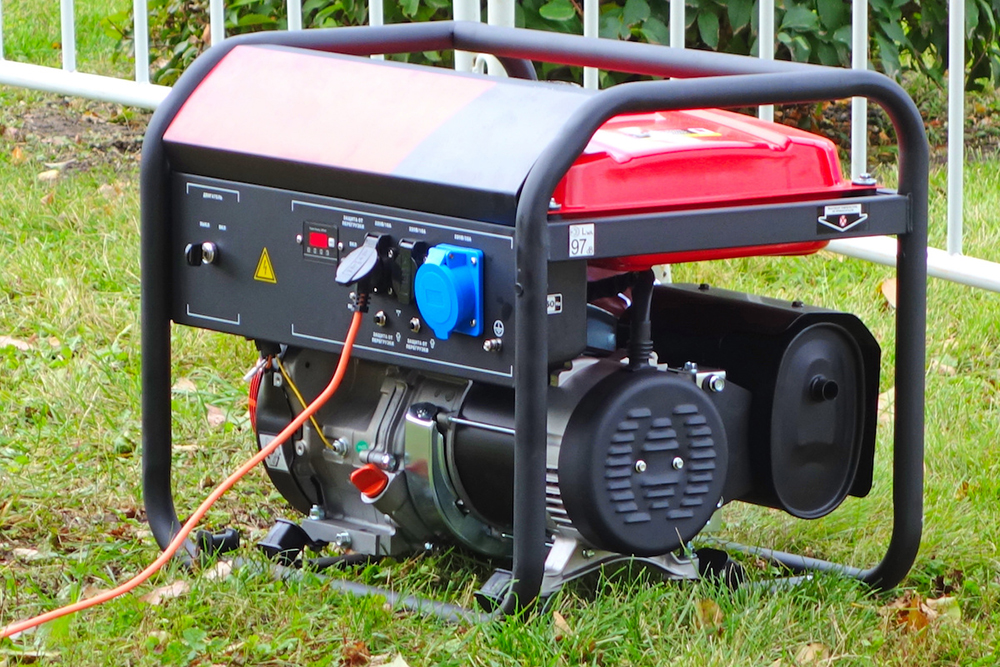
You run cords directly from the generator to specific appliances.
This works for:
- Refrigerators
- Sump pumps
- Space heaters
- Small loads
It does not power your panel. It does not power your house wiring. It’s inconvenient, but safe when done correctly.
2. Manual Transfer Switch
A manual transfer switch is installed next to your electrical panel. During an outage, you:
- Turn off the main breaker
- Flip the transfer switch
- Start the generator
This allows you to power selected circuits safely.
Manual systems are common with:
- Portable generators (7,000–12,000 watts)
- Partial-home setups
- Budget-conscious installs
You choose which circuits matter most: fridge, furnace blower, lights, a few specific outlets, and so on. It’s controlled. It’s code-compliant. But, it requires you to be present to turn the switch on.
Interlock Kits (A Middle-Ground Option)
There’s one more option that gets talked about a lot once homeowners start researching this: a generator interlock kit.
An interlock isn’t a separate box mounted next to the panel like a manual transfer switch. It’s a mechanical sliding plate installed directly onto your existing breaker panel. Its job is simple: it physically prevents the main breaker and the generator breaker from being on at the same time.
When the power goes out, you turn off the main breaker, slide the interlock plate into position, and then turn on the generator breaker. The design makes it impossible to energize both sources simultaneously.
It’s a cleaner setup than extension cords, and usually less expensive than installing a separate transfer switch. That’s why it’s popular with portable generator owners.
That said, it still requires proper installation. You need:
- A correctly sized double-pole breaker
- A generator inlet box (not a dryer outlet)
- Proper conductor sizing
- Panel compatibility with a listed interlock kit
Not every panel accepts every interlock. Using a generic kit that isn’t listed for your specific panel can cause problems during inspection.
When installed correctly, an interlock is code-compliant in many jurisdictions and gives you access to most circuits in your panel — as long as you manage load manually and don’t overload the generator.
It’s not automatic, and it won’t think for you. But it’s a legitimate and widely used solution when done properly.
3. Automatic Transfer Switch (For Standby / Whole Home Generators)
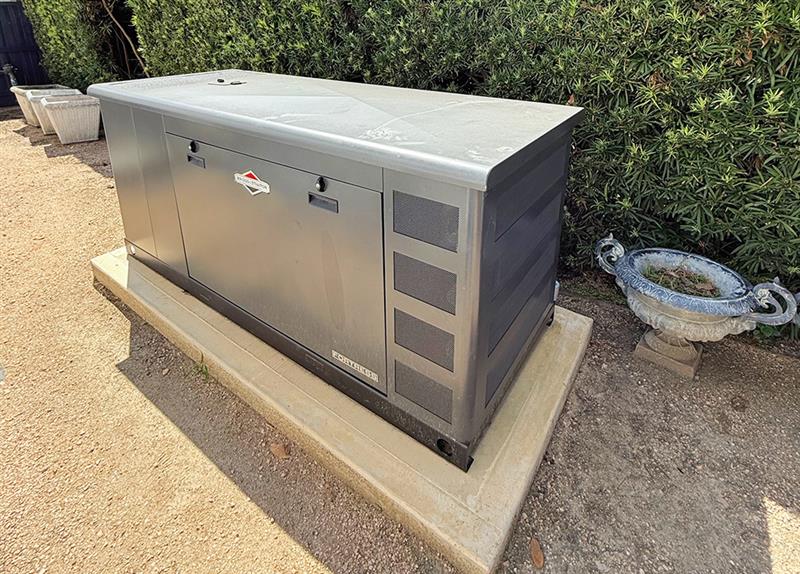
This is what people mean when they say “whole home generator.”
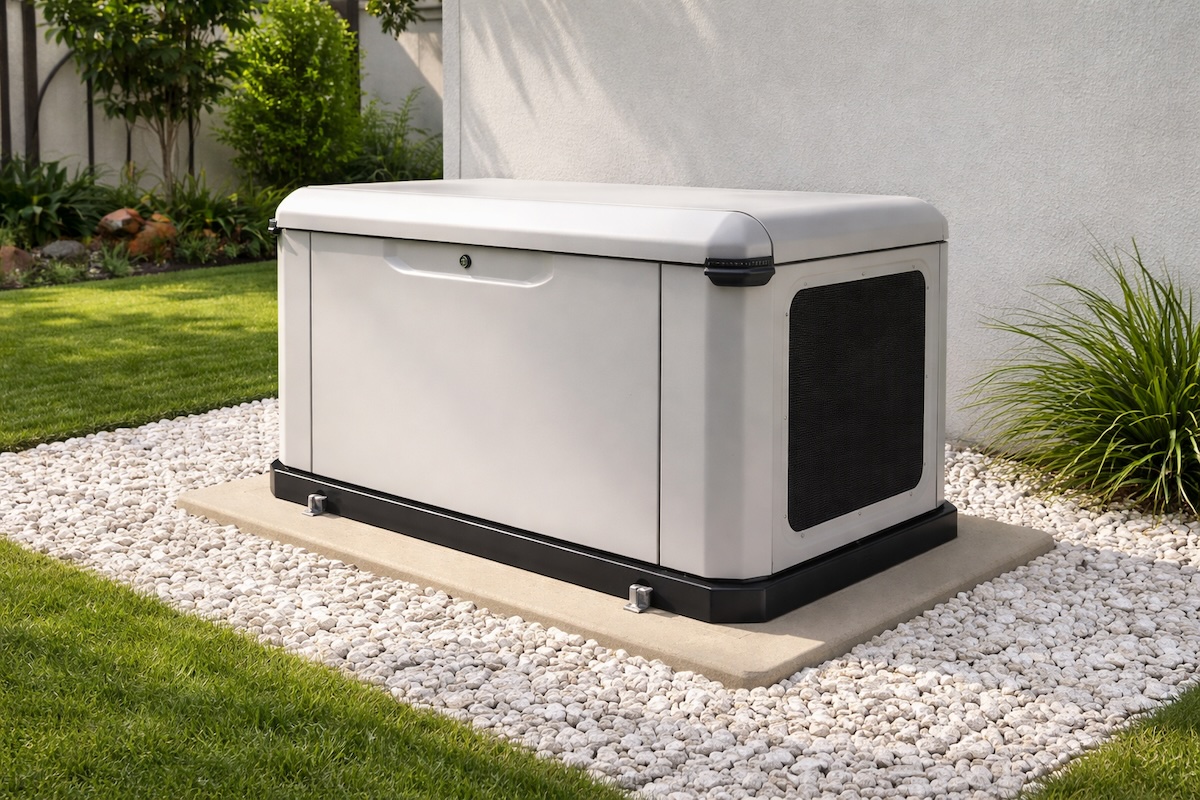
A standby generator is permanently installed outside the home and wired directly into:
- Your main electrical service
- An automatic transfer switch (ATS)
- A fuel source (natural gas or propane)
When the power goes out:
- The ATS detects utility failure
- It disconnects the home from the grid
- The generator starts automatically
- Your home is powered within seconds
No extension cords. No flipping breakers in the rain. No guessing.
It’s an engineered system, not a workaround.
Why Plugging a Portable Generator Into an Outlet Is Dangerous

Here’s what happens when someone backfeeds through an outlet:
- The generator energizes your panel.
- That energy can travel backward through your main breaker.
- It can push voltage out onto the utility lines.
More specifically, your main breaker is designed to accept power from the utility side and distribute it downward into branch circuits. When someone energizes the panel from the load side, electricity doesn’t know it’s “supposed” to stop. It will travel upstream through the bus bars and, if the main breaker is closed or fails internally, out toward the transformer on the street.
That transformer works both directions. Normally it steps high voltage down to usable household voltage. Energize it from your house side and it can step voltage back up onto distribution lines. That’s how a small portable generator can energize equipment that looks completely de-energized from the utility’s perspective.
It’s also how people fry expensive electronics without understanding what happened. Generators produce power that isn’t always as stable as grid power. If the neutral is mishandled or bonding is incorrect, voltage imbalances show up in appliances that were never designed to deal with them. Refrigerators, furnaces, control boards — they tend to be the first casualties.
Most homeowners never see the internal damage. They just find that things don’t work the same afterward.
Generator Inlet Boxes
If you’re not plugging into an outlet inside the house, what does a proper connection of this type look like? It’s called a generator inlet box. This is a weatherproof receptacle mounted on the exterior of the home. Instead of pushing power into a random outlet, you plug the generator cord into this inlet. From there, wiring runs directly to either:
- A transfer switch, or
- A breaker controlled by an interlock kit
The inlet is wired with appropriately sized conductors based on the generator’s output, typically 30-amp or 50-amp connections for most residential portable units.
It looks simple from the outside. Just a covered box with a twist-lock plug. But inside, it’s tied into the panel in a controlled, intentional way.
What Standby Home Generator Installation Actually Involves
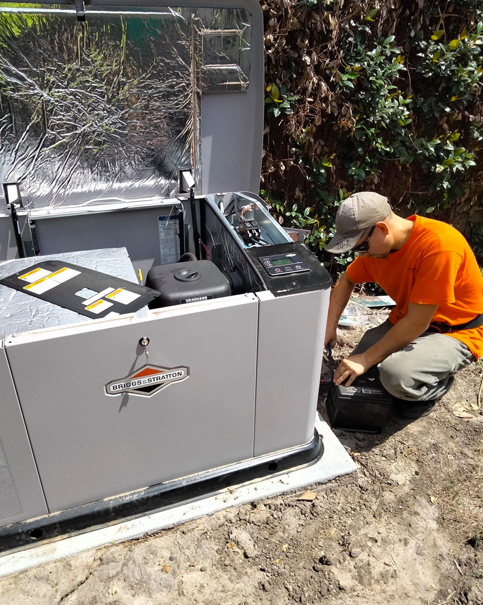
Home standby generator installation begins at the service equipment. An electrician evaluates the amperage of your incoming service (commonly 200 amps in newer homes) and determines how the automatic transfer switch will be integrated. In many cases, the ATS becomes the new first point of connection after the meter. Utility power feeds the transfer switch. The transfer switch feeds the panel. The generator ties into that same switch.
That switch is doing constant monitoring. When it senses loss of voltage from the utility, it opens the connection to the grid before the generator ever energizes the panel. (This sequencing is very deliberate, to make sure there’s no overlap.)
From there, the installation expands outward. The generator needs a stable base, usually a poured concrete or composite pad. Clearances must be maintained from windows, doors, and vents because exhaust gases are real and code takes that seriously. Fuel supply has to be verified. A natural gas meter may need upsizing. Propane tanks must be sized for runtime under load, not just startup.
Then there’s load calculation. Air conditioners draw a significant inrush current when they start. Electric water heaters and ovens can pull large steady loads. If everything attempts to start simultaneously, even a large generator can trip offline. That’s why many installations incorporate load management modules. They sequence heavy appliances so the generator doesn’t get overwhelmed.
Of course, you don’t see a lot of this once it’s finished. You just notice that the lights come back on quickly during an outage.
Sizing a Home Generator Isn’t About Square Footage
Homeowners often ask questions like, “What size generator do I need for a 2,500 square foot house?” However, the square footage doesn’t determine demand.

A modest home with electric heat and dual air conditioning systems can require more capacity than a larger home with gas heat and a single HVAC unit. Well pumps, tankless water heaters, pool equipment, and EV chargers all change the equation.
An electrician performing a proper load calculation looks at actual breaker ratings and appliance nameplates. The goal isn’t to install the biggest unit available. It’s to install one that can carry realistic operating loads without unnecessary oversizing. Oversized systems cost more upfront and burn more fuel than necessary under light demand. Undersized systems struggle during peak use. That’s why it’s important that someone qualified runs the numbers carefully.
Why Permits & Inspections Are Part of This
Electrical work at the service level affects more than one circuit. It affects the entire structure. That’s why standby generator installations require permits in most jurisdictions.
An inspection confirms that grounding and bonding are correct. It verifies that the neutral isn’t improperly switched where it shouldn’t be. It checks that conductor sizing matches breaker ratings and that clearances meet manufacturer requirements.
These aren’t bureaucratic hoops. They exist because service-level mistakes have larger consequences than a single outlet wired incorrectly.
During a home sale, inspectors often look for evidence of proper generator integration. A professionally installed standby system reads as infrastructure. An improvised connection raises questions that can slow down a closing.
Final Thoughts

When someone types “Can you just hook up a generator to your house?” they’re usually tired of outages. They’re thinking about frozen food thawing, losing hundreds of dollars of groceries, sump pumps that stop working at the worst time, freezing or overheated rooms.
The question is practical. What they’re really asking is how much work and cost stand between them and power reliability.
Extension cords solve an immediate problem. Manual transfer switches reduce chaos and allow structured power distribution. Standby generators eliminate the scramble altogether. Each step upward involves more planning and higher upfront cost, but it also significantly reduces the amount of involvement required during an outage.
Unfortunately, there isn’t a hidden shortcut that skips the electrical infrastructure part. The safety mechanisms are the infrastructure. Once home generator installation is completed correctly, the system fades into the background of the home.